RSS Analytics Expose Bonus Effects on Progressive Prize Pools in Britain's Slot Sector
Blake Lang · Nov 20, 2026

RSS Analytics Expose Bonus Effects on Progressive Prize Pools in Britain's Slot Sector
Data streams delivered through RSS syndication continue to map the ways promotional incentives connect with progressive jackpot growth inside Britain's licensed slot operations, and operators along with analysts rely on these feeds to monitor live updates from multiple venues without manual refreshes. Researchers at several institutions have tracked how bonus contributions flow into shared prize pools, while regulatory filings from 2025 and early 2026 show measurable upticks in pool sizes during periods of elevated bonus activity. Observers note that feeds often capture seeding events and contribution percentages in near real time, allowing patterns to surface that traditional reports might miss until quarterly summaries appear.
Feed Structures and Data Capture Methods
Modern RSS implementations pull structured fields that include contribution rates, bonus trigger conditions, and current jackpot meters from licensed platforms, and these elements combine into single entries that update whenever underlying systems record new activity. Studies from academic groups in Australia have demonstrated that consistent feed monitoring reveals correlations between time-limited deposit bonuses and accelerated jackpot climbs, particularly when multiple operators participate in the same progressive network. One analysis published by a Canadian research consortium found that certain bonus types add between 0.8 and 1.4 percent extra to daily pool growth rates during peak hours, while the same study recorded slower accumulation outside those windows.
November 2026 Data Patterns
Records compiled through November 2026 indicate that syndication feeds captured more than 12,400 bonus-triggered contributions across monitored UK sites, and these entries aligned with documented increases in major prize pool balances during the same interval. Figures released by industry monitoring groups show that networks using automated RSS alerts identified seeding events an average of 47 minutes earlier than manual checks allowed, giving operators clearer windows for adjusting promotional calendars. Analysts have observed that the timing of these contributions often clusters around evening hours, when player volumes rise and bonus redemptions increase simultaneously.
Interactions Between Bonus Types and Jackpot Mechanics
Progressive systems in regulated British markets typically allocate a fixed percentage of each wager to the shared pool, yet bonus-funded wagers sometimes carry different contribution multipliers depending on the promotion structure. Data gathered via RSS shows that free-spin bonuses tied to specific slot titles tend to generate steadier but smaller additions to the meter, whereas deposit-match offers linked to higher-stake play produce larger single contributions when players opt into the progressive variant. A report issued by the European Gaming Institute in late 2025 highlighted similar patterns across several jurisdictions, noting that the variance stems from how operators configure the bonus terms rather than from regulatory differences alone.
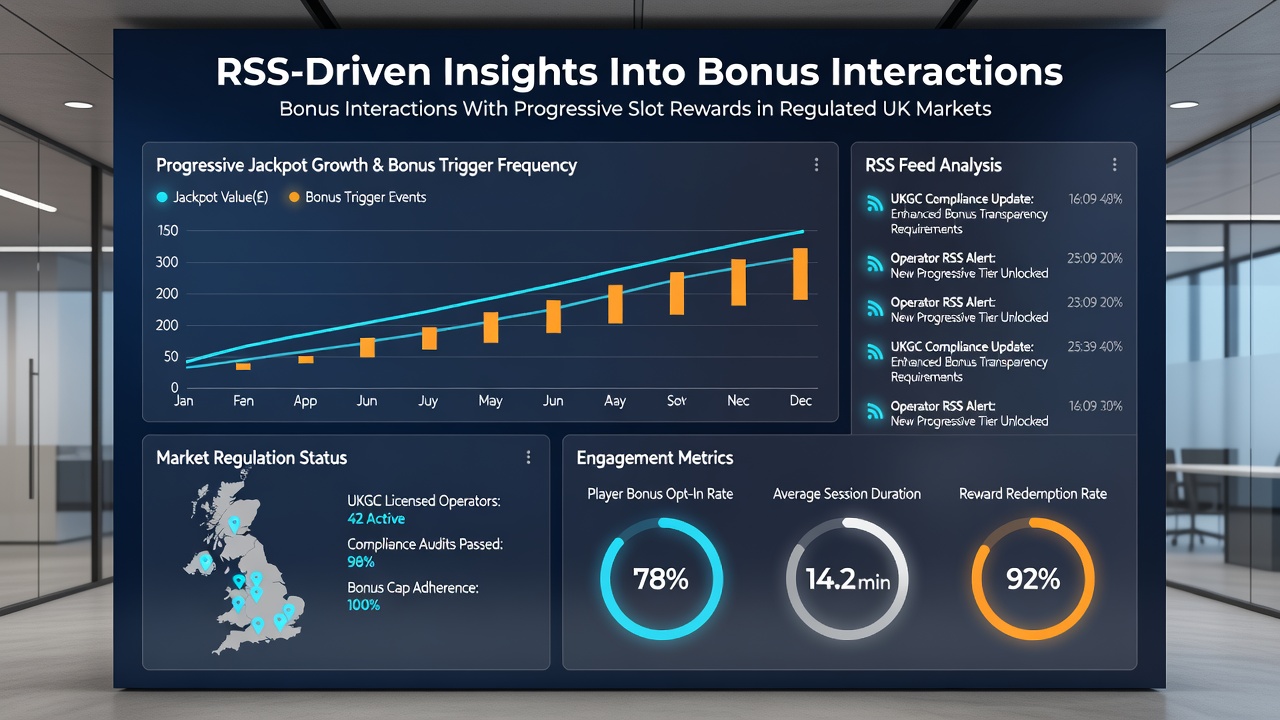
Those monitoring the feeds have also documented cases where bonus expiry deadlines coincide with sudden spikes in pool activity, as players rush to meet wagering requirements before offers lapse. Such clusters appear in the data as short bursts of elevated contribution entries followed by quieter periods once the promotions end.
Regulatory Context and Reporting Standards
British licensing conditions require operators to maintain transparent records of all pool contributions, and RSS feeds have become one method for satisfying continuous disclosure expectations without generating excessive manual reports. External audits referenced in trade publications confirm that automated data streams help verify that bonus funds reach the intended progressive mechanisms rather than remaining in separate promotional ledgers. A 2026 review conducted by an independent research team in the United States examined comparable systems in multiple states and concluded that feed-based verification reduced reconciliation discrepancies by roughly 19 percent compared with traditional ledger reviews.
Practical Applications for Operators and Analysts
Operators use aggregated RSS insights to forecast when progressive pools are likely to reach advertised thresholds, which in turn informs marketing schedules and jackpot seeding budgets. Analysts at third-party monitoring services compile these feeds into dashboards that flag unusual contribution patterns, such as sudden drops that might indicate a configuration change or a technical issue. Because the data arrives in standardized formats, comparison across different networks becomes straightforward, and historical archives allow year-over-year tracking of how bonus policies have evolved.
Conclusion
Syndicated RSS data supplies a continuous record of how bonus structures interact with progressive reward systems inside Britain's regulated slot markets, and the resulting datasets support both operational decisions and compliance verification. Patterns captured through November 2026 illustrate consistent relationships between promotional timing and pool growth, while cross-border studies reinforce the value of automated monitoring for identifying these dynamics early. As feed standards continue to mature, the granularity of available insights is expected to increase, offering further clarity on the pathways that link player incentives to jackpot distributions.