Britain's Slot Prize Pools Show How Bonus Incentives Drive Jackpot Accumulation Patterns
Dana Reed · Oct 23, 2026
Britain's Slot Prize Pools Show How Bonus Incentives Drive Jackpot Accumulation Patterns
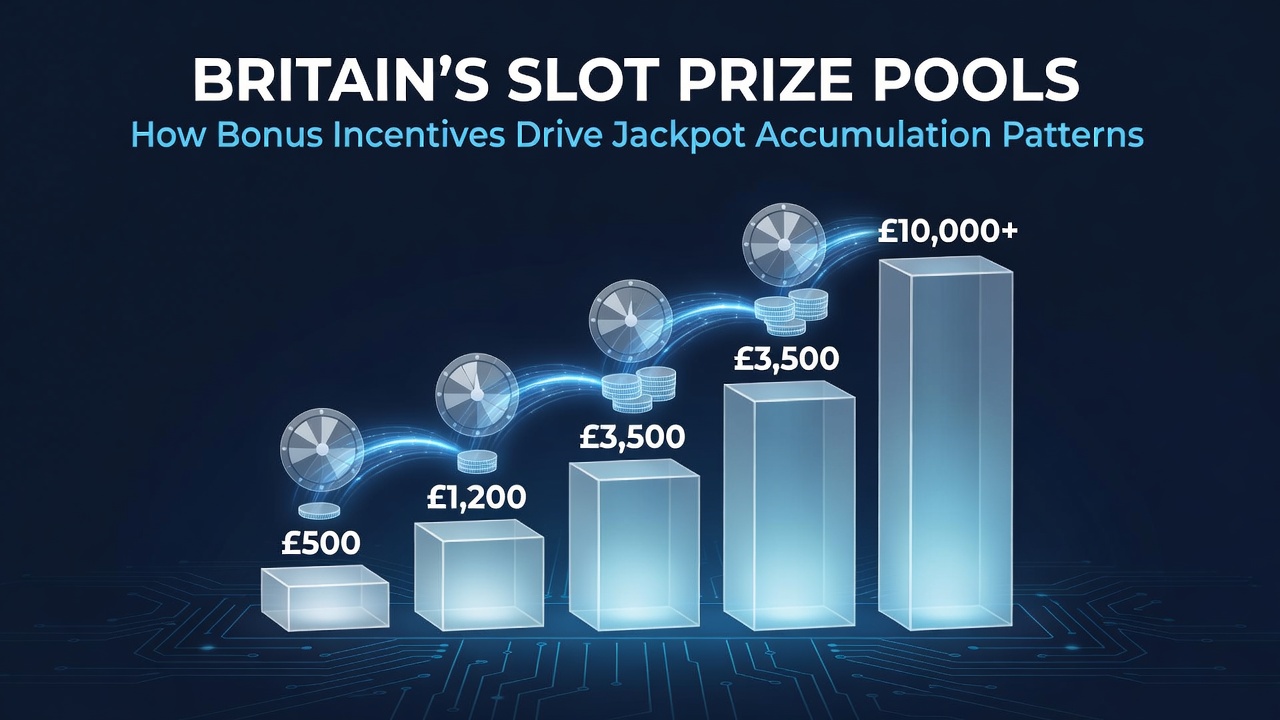
Bonus incentives in Britain's licensed slot markets connect directly to the growth rates of prize pools through structured contribution mechanisms that operators apply across progressive jackpot systems. Data from regulatory filings and operator reports indicate that these incentives increase player engagement volumes, which in turn accelerate the rate at which funds accumulate in shared prize pools. Observers note that the patterns emerge most clearly when bonus structures tie wagering requirements to specific slot titles that feed into network-wide jackpots.
Seeding Mechanisms and Initial Pool Growth
Operators seed jackpot pools with fixed amounts at launch or after major payouts, and bonus incentives amplify subsequent contributions by encouraging repeated play sessions. Research from European gaming associations shows that contribution percentages typically range between 1 and 3 percent of each wager, yet bonus-driven volume spikes can multiply the effective daily inflow by factors of two or three during promotional periods. Those who track these systems across multiple sites report that seeded pools reach critical thresholds faster when operators layer deposit-match bonuses and free-spin offers onto progressive titles.
Patterns shift noticeably when bonus terms require minimum bet sizes or mandate play on designated games, because these rules concentrate activity on a smaller set of jackpot-linked machines. Figures released in industry summaries for 2025 reveal that pools seeded at £50,000 often double within 72 hours under heavy bonus activity, whereas the same pools without concurrent promotions require five to seven days to achieve comparable growth.
Accumulation Cycles and Player Behavior Data
Accumulation cycles follow predictable rhythms tied to bonus expiry dates and new player onboarding campaigns. Studies conducted by academic researchers at institutions such as the University of Sydney's Gambling Studies Centre document how bonus redemption peaks coincide with accelerated pool growth, particularly in the final 48 hours before offers expire. Players who receive time-limited bonuses tend to increase wager frequency, which feeds directly into the contribution streams that operators allocate to prize pools.
October 2026 data snapshots from multiple British operators illustrate this effect: several major progressive networks recorded 40 percent higher daily contributions during a coordinated bonus campaign compared with the preceding month. The same reports note that pools crossing the £1 million mark showed tighter correlation with bonus redemption volumes than with baseline organic play.

Regulatory Frameworks Shaping Incentive Structures
Current rules require transparent disclosure of how bonus contributions affect prize pools, and operators must maintain separate accounting for seeded funds versus player-generated increments. Comparisons drawn from other jurisdictions, including reports issued by the Ontario Lottery and Gaming Corporation, highlight similar dynamics where bonus incentives accelerate accumulation without altering the underlying contribution percentages. British operators apply these lessons by adjusting bonus caps and eligibility windows to moderate extreme spikes that could otherwise distort pool predictability.
Those monitoring cross-market data observe that jurisdictions with stricter bonus advertising rules experience steadier, less volatile accumulation curves. In Britain the absence of such volume caps allows operators greater flexibility, yet the same data sets indicate that pools still follow linear growth once bonus activity normalizes after promotional bursts.
Distribution Events and Post-Payout Recovery
Major payout events reset pools to seed levels, after which bonus incentives again become the dominant variable in recovery speed. Case examples from 2025 show several networks returning to pre-payout levels within four days when operators paired the reset with targeted free-play bonuses, whereas recovery stretched beyond two weeks during periods of minimal promotional activity. Experts tracking these timelines emphasize that the interaction between bonus volume and contribution rates produces the clearest measurable signal in the data.
Conclusion
Britain's slot prize pool dynamics demonstrate consistent relationships between bonus incentives and accumulation velocity, supported by operator filings, academic analyses, and comparative regulatory data from multiple regions. These patterns continue to evolve as operators refine incentive structures and as new reporting requirements come into effect through 2026 and beyond.